
How Many Guests Should You Invite to Your Wedding?
The first big question is almost never the dress or the flowers. It is the number. How many people do you actually invite, and how do you land on a count that fits your budget, your venue, and the day you keep picturing in your head. It feels personal because it is, and the good news is there is a sane way to work through it.
Start With the Two Numbers That Decide It
Before you write a single name down, settle two things: what you can comfortably spend, and how many people your venue can hold. These are your guardrails. Everything else, the cousins and the coworkers and the friend you have not seen since college, gets sorted inside those two limits.
Most couples land somewhere between 100 and 150 guests, and the national average sits around 165. But averages are not a target. Plenty of weddings we host run smaller, in the 60 to 90 range, and feel full and warm. Others fill the field. Your number should come from your budget and your people, not from what is typical.
Your Guest Count Touches Everything Else
Here is the part that surprises people. The guest list is the single biggest lever in your whole budget, bigger than the dress, bigger than the band. Every name you add brings a chair, a place setting, a meal, a slice of cake, and a few drinks at the bar. Catering and bar costs are almost always priced per head, so twenty extra guests is not a rounding error. It is real money.
That is also why trimming the list is the fastest way to bring a budget back in line. If the numbers feel tight, you do not have to cut the flowers or the photographer you love. You cut ten names off the outer edge of the list and the math relaxes. This year especially, with food and rentals costing more than they did a couple of years ago, a lot of couples are choosing a slightly smaller, fuller room over a bigger, thinner one.
Build Your List in Tiers
The cleanest way to build a guest list is to sort everyone into three tiers, then add from the top down until you hit your number. Do this together, in one sitting, with a glass of wine.
- Must-haves. Immediate family and the handful of people you genuinely cannot imagine standing up there without. This tier is short and it is not negotiable.
- Want-to-haves. Extended family, close friends, the people you would be sad to leave out. Most of your list lives here.
- Would-be-nice. Distant relatives, work friends, the neighbors, anyone you are inviting partly out of obligation. This is the tier you trim first.
Add tier one, then tier two, and stop the moment you reach your capacity or your budget. Whatever is left in tier three becomes your B-list, and we will get to why that is useful in a minute.
The Plus-One and Kids Questions
Two decisions trip up almost everyone, so decide them early and apply them to the whole list, not name by name. Consistency is what keeps feelings from getting hurt.
For plus-ones, a fair line is to offer one to anyone married, engaged, or in a long-term relationship, and to skip it for casual or brand-new pairings. For children, you get to choose. An adults-only evening is completely normal, and it is one of the simplest ways to bring a count down without cutting anyone you love. If you go that route, just say it plainly on the invitation and tell a few key families in person so no one is caught off guard.
How to Trim Without the Guilt
This is the part that keeps people up at night, and it does not have to. A few honest rules make it easier on everyone, including you.
Pick a cutoff and hold it. If you invite first cousins, you do not invite second cousins. If you skip coworkers, you skip all of them, not just the ones in your row. The cleaner the rule, the less it feels like a personal judgment. And when a relative asks why someone was left off, a simple, kind answer is all you owe them: our space has a limit, and we had to keep the day to the people closest to us. Most people understand that immediately, because most people have planned something themselves.
This is also where the B-list earns its keep. Some of your invitations will come back as no. As those declines arrive, you quietly send invitations to the next names on your list. Done early and graciously, no one ever knows, and you end up with the full room you wanted.
What Different Sizes Feel Like at Highland Oaks
Numbers on a spreadsheet are hard to picture, so it helps to walk the space and imagine it full. At Highland Oaks we can host up to 300, which gives you room to dream big, but bigger is not the goal. The goal is a room that feels right.
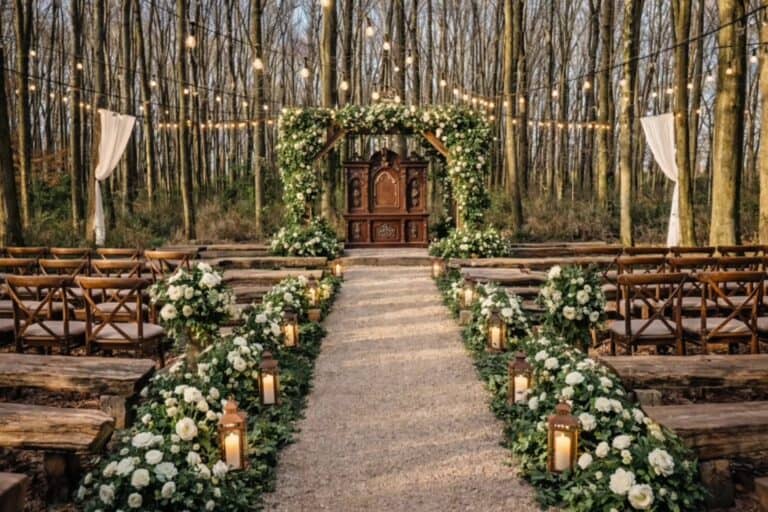
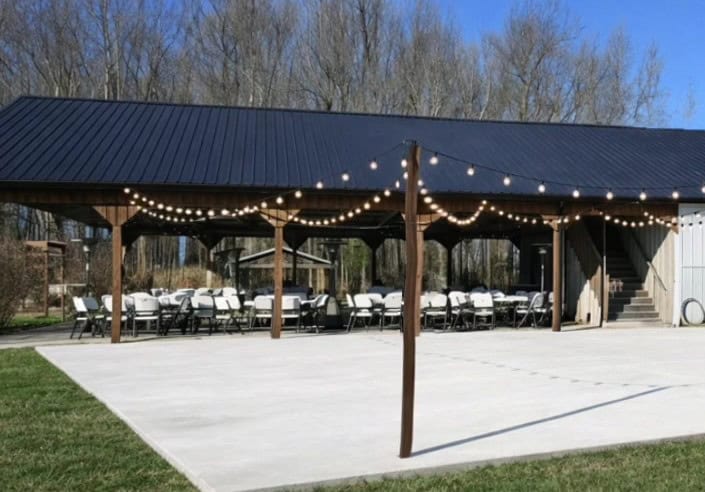
A wedding of 70 under the covered pavilion, string lights on, the oaks going gold behind you, feels intimate in the best way. You actually get to talk to everyone. A celebration of 220, dance floor packed, the barn glowing after dark, feels like the whole world showed up for you. Both are wonderful. Neither is more correct. When you tour the property, stand in the field and in the barn and picture your people there. The right number usually makes itself obvious once you can see the space they will fill.
There Is No Wrong Number
The only guest list that matters is the one that fits your budget, fits your space, and fills the room with the people who love you. Sixty or two hundred and sixty, a wedding is not measured by the headcount. It is measured by who is in the room and how the night feels.
If you are trying to picture your number in a real place, come see ours. We would love to show you the oaks, the field, and the barn, and help you imagine your people gathered here. You can see our pricing or reach out to book a tour at Highland Oaks, about twenty-five minutes from Louisville in Palmyra, Indiana.
Planning a wedding near Louisville?
Highland Oaks is a barn wedding venue in Palmyra, Indiana, a short drive from Louisville. Come walk the grounds and picture your day. Tours take about 45 minutes, with no pressure.
Book a TourPrefer to talk it through first? Call or text (502) 785-9671.