What Happens at a Wedding Rehearsal?
Somewhere between booking the venue and picking a first dance song, the rehearsal turns into a question mark. You know it happens the night before. You are less sure what actually happens during it, who is supposed to run it, or how much time to tell everyone to block off. Here is the plain version, including the one scheduling question most couples do not think to ask until it is too late to change anything.
What a wedding rehearsal actually is
A rehearsal is a walk-through of your ceremony, and only your ceremony. Nobody rehearses the reception. You gather the people who have a job during the ceremony and run the whole thing from the first seated grandparent to the recessional, so that on the wedding day nobody is guessing where to stand or when to walk.
That is the entire point. Most of what couples dread about the ceremony turns out to be logistics you can settle in ten minutes. Which side everyone stands on. How far apart you walk. Who holds the rings. Where a parent sits after walking you down. Answer those once, out loud, with everyone standing in the actual spot, and the ceremony stops feeling like a performance you never practiced.
Who runs it
Your officiant, your coordinator, or the venue team. In practice the work splits two ways. The officiant owns what is said (the order of readings, the vows, the ring exchange, the pronouncement). Whoever is coordinating owns how people move (spacing, cues, where everyone stands and which way they face).
Here is the honest part. If your officiant is a friend or a family member and you have not hired a coordinator, somebody still has to run the room. Decide who that is before you show up. Rehearsals stall when fifteen people are standing in a field waiting for someone to take charge, and a stalled rehearsal is how a thirty minute job turns into ninety.
Every rental at Highland Oaks includes a rehearsal hour, and our team is here to help you use it. If you want someone owning the ceremony flow and the rest of the day too, coordinator packages are available as an add-on. We went deeper on that choice in venue coordinator versus day-of coordinator.
How long it takes
Plan on thirty to sixty minutes. A small wedding party and a simple ceremony can be done in half an hour. Readings, a unity moment, live musicians, kids in the processional, or a party of twelve will push you toward the full hour.
Aim for two run-throughs. The first one slow, with talking and questions. The second at real speed with no narration, so people feel the pace instead of hearing about it. If you only get one pass, you have not really rehearsed, you have been briefed.
Highland Oaks includes a one hour rehearsal with every rental, which is comfortable for a typical ceremony as long as you start on time. Starting on time is the hard part when half the wedding party is driving in from out of town. Tell everyone a start time fifteen minutes earlier than the real one and do not apologize for it.
When to schedule it, and the question to ask early
Most rehearsals happen the evening before the wedding. Most, not all. Venues that host weddings on Fridays and Sundays cannot always hand you the night before, and your slot may depend on whether there is an event on the property that day.
So ask early, well before you reserve a restaurant or tell your wedding party a time: what day and hour is my rehearsal, is it confirmed now or scheduled closer to the date, and what happens to it if there is an event here the night before. Get the answer in writing along with the rest of your timeline. It is a five minute conversation that saves you from rebooking dinner for twenty people.
If the night before is not available, you have real options. Rehearse two evenings out. Rehearse the morning of, which works better than people expect for an evening ceremony because nobody has time to forget. Or run it anywhere with a straight line and enough room to count paces, then walk the actual aisle once when you arrive. Fall dates in southern Indiana fill first, so if you are planning for September through November, pin the rehearsal down early rather than assuming.
Who actually needs to be there
- Both of you, and your officiant
- Everyone standing up with you, plus ushers and anyone escorting a family member down the aisle
- Parents and grandparents who are being seated or walking
- Readers, singers, musicians, and anyone else with a job during the ceremony
- Your flower girl or ring bearer, with a parent
- Whoever is running the ceremony music, even if that is a friend with a phone and a speaker
- Your coordinator, if you have one
Everyone else is optional. Cousins and college friends who happen to be in town do not need to stand through it. A tight group moves faster, and the people who came to work will thank you for it.
What you walk through
Run it in the order it will happen: seating the family, the processional with spacing, where everyone lands, the handoff of your bouquet, the ceremony beats your officiant will call, the kiss, the recessional, and what happens in the sixty seconds after. That last one gets skipped constantly. Where do the two of you go. Where does the wedding party go. Who is dismissing rows. If you have already built your wedding day timeline, bring it and check the ceremony block against reality.
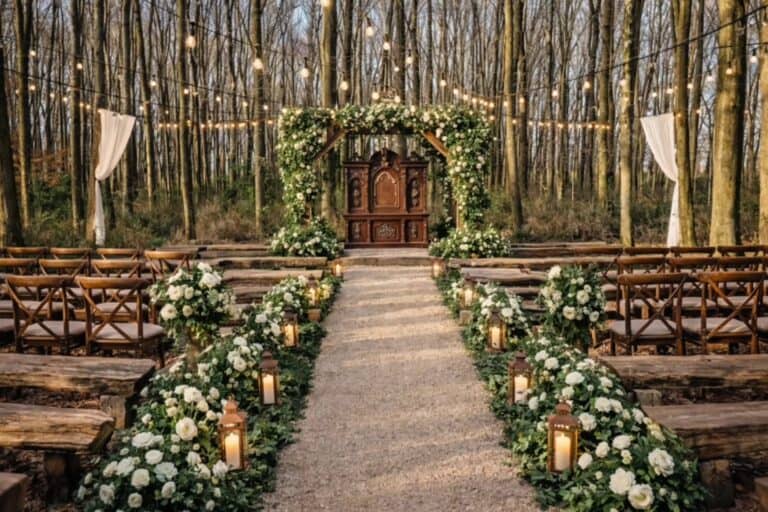
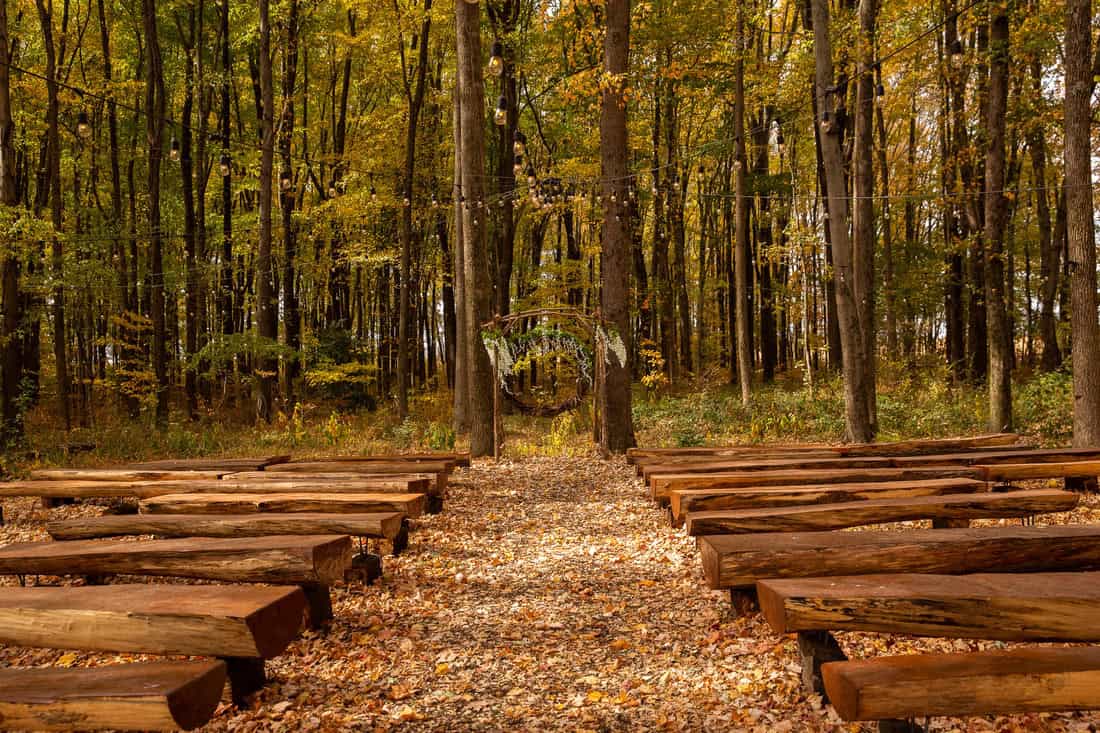
Two details deserve extra attention outdoors. Sound, because open air swallows a voice and the back row should still hear the vows. And footing, because grass, gravel, and heels are a combination worth one practice lap. If you can, rehearse near the hour your ceremony will start so you see where the light and the shade actually fall. Under the oaks here, that hour looks very different in September than it does in May.
Bring the things you keep meaning to hand off: the marriage license if your officiant collects it, the ceremony script, a printed processional order, rings, unity items, signs, and the guest book. Anything you drop off tonight is one less thing anybody is hunting for tomorrow morning.
The rehearsal dinner comes right after
Dinner follows the rehearsal the same evening. The guest list is usually everyone who was at the rehearsal plus their partners, immediate family, and, if the budget allows, out of town family who traveled to be there. Invitations go out four to six weeks ahead. Traditionally the groom’s family hosts, though plenty of families split it now, which we covered in what the groom’s parents pay for. If relatives are driving in, this is also the weekend your hotel block earns its keep.
Keep it earlier and shorter than you think you want to. Everyone has a long day ahead, and a rehearsal dinner that runs past midnight shows up in the next day’s photos.
Hosting it on site removes a drive and a second set of directions. Highland Oaks offers a rehearsal dinner space as an add-on package, and the on-site cottage can be added so your closest people stay right here the night before and get ready the next morning. Both are add-ons with limited availability, so ask when you book rather than a month out. You can see how the add-ons work on our pricing page.
The night before sets the tone for the day
Couples who rehearse well tend to describe the ceremony the same way afterward. They say they were actually present for it. That is not a coincidence. When your body already knows the walk, your head is free for the part that matters.
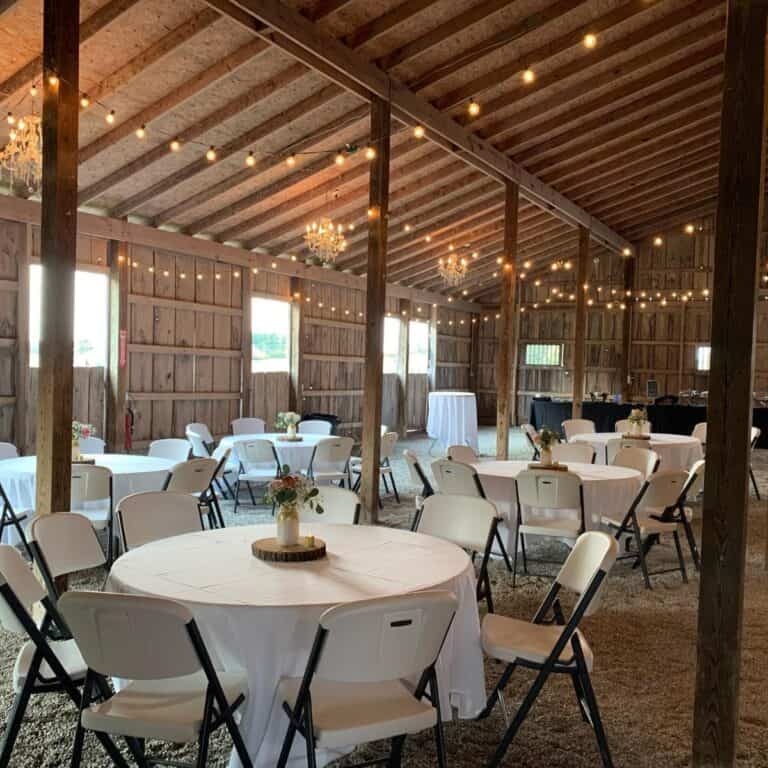
Highland Oaks sits on thirty-six acres in Palmyra, about twenty-five minutes from Louisville, with the ceremony under the oaks and the reception under the covered pavilion. Come walk the aisle long before you have to walk it for real. Book a tour and you can meet Carrie and the team, see the ceremony spots, and ask every logistics question on your list.
Planning a wedding near Louisville?
Highland Oaks is a barn wedding venue in Palmyra, Indiana, a short drive from Louisville. Come walk the grounds and picture your day. Tours take about 45 minutes, with no pressure.
Book a TourPrefer to talk it through first? Call or text (502) 785-9671.