Buffet vs Plated vs Family Style Wedding Dinner
The dinner is the longest stretch of your reception, and how it is served shapes the whole evening. It sets the pace, it sets the mood, and it drives a real share of your food budget. Here is how plated, buffet, family style, and stations actually differ, so you can pick the one that fits your wedding instead of the one the internet insists is best.
Start with how you want dinner to feel
Before you compare a single price, picture the room. Do you want your guests seated and served while the evening light comes through the pavilion, or up and moving, building their own plates and talking on the way back to the table. There is no wrong answer here. A calm, formal dinner and a loose, mingling one are both good weddings. Choose the feeling you actually want first, then sort the logistics around it. That order keeps you from picking a style just because it looked nice on someone else’s wedding.
Plated dinner: control and calm
A plated dinner is brought to each guest at the table, usually after they pick an entree on the RSVP. It gives you the most control of any option. Everyone eats at the same time, the portions are consistent, the plates look composed, and the room stays seated so your toasts and first dance follow cleanly. The tradeoff is cost and rigidity. Plated service needs the most kitchen and serving staff, so it tends to be the priciest way to serve the same menu, and you commit to entree counts weeks out. If you want a polished, orderly evening and your guest list is not huge, plated earns its keep.
Buffet: freedom and value
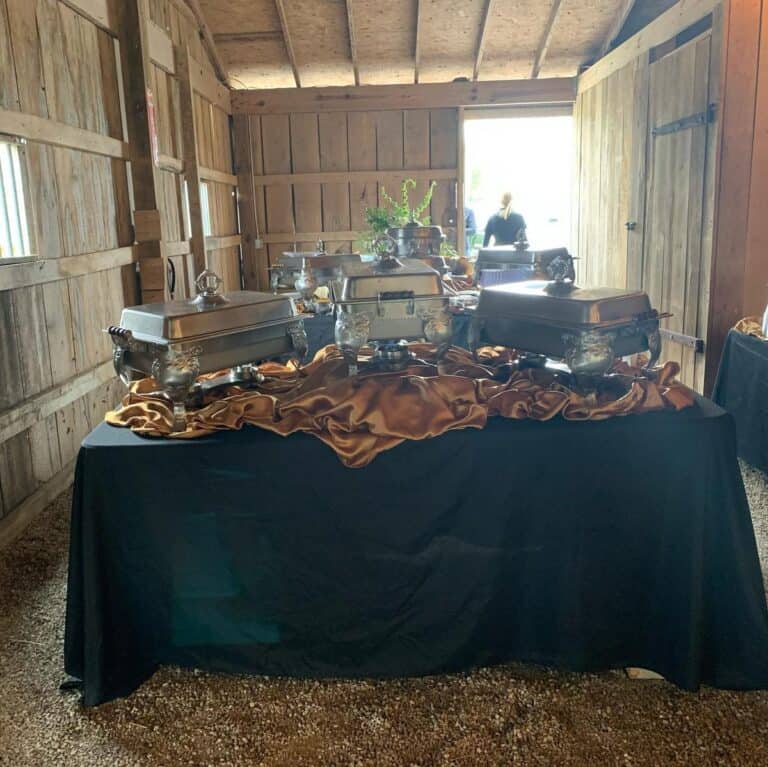
A buffet lets guests serve themselves from a line. It is usually the friendlier option on the budget, because it needs fewer serving staff, and it gives people choice: portion size, variety, a second trip if they want one. It also loosens the room in a good way, since folks are up and talking. The thing to plan for is lines. One serving line for a big crowd means people waiting while their table is called, which can stall the whole timeline. The fix is simple: a double sided line, or two stations, and releasing tables one at a time. Ask your caterer how they run it. Done well, a buffet feeds a big group faster than couples expect.
Family style: the warm middle ground
Family style lands between the two. Platters and bowls come out to each table and guests pass them, the way a big holiday dinner works. It feels generous, and it gets a table talking, which is why it suits a barn or a field wedding so well. Two honest catches come with it. It needs staffing close to a plated dinner, so the savings over plated are small. And it eats table space, because every table has to hold the serving platters plus the place settings, which can mean slightly larger tables or a few fewer seats per table. If that warmth is worth it to you, it is a lovely way to eat.
Stations and the late night snack
Food stations spread the meal across the room: a pasta station, a carving station, a taco bar, a build your own board. They keep guests moving and turn dinner into part of the party. They can cost more once you add the staff and equipment each station needs, and they work best when the floor plan has room for people to flow without bottlenecks. Even if you do not build the whole dinner around stations, one late night snack near the end, sliders or fries or a warm pretzel cart, is one of the most remembered moments of a reception. It also quietly rescues the guests who danced straight through the cake.
How the style changes your timeline
This is the part couples underestimate. Service style sets the clock for the middle of your night. A plated dinner runs on a tight, predictable schedule, which is the easiest to build a timeline around. A buffet can be quick or slow depending on how the lines are run, so build in a buffer and decide the release order ahead of time. Family style needs a few minutes at the top for the platters to reach every table before people dig in. Whatever you choose, tell your caterer and your venue the plan early, so the room is set for it and your toasts and dances land where you want them. If you are mapping the evening, our wedding day timeline guide walks through it hour by hour.
What to ask before you decide
Once you have a style in mind, a short list of questions to your caterer and your venue will tell you whether it truly fits your day:
- How many serving staff does each style include, and what does adding staff cost?
- For a buffet, is it a double sided line or separate stations, and how are tables released?
- For family style, do the tables fit the platters plus place settings at our guest count?
- Does the venue set and reset the tables, or does the caterer handle it?
- How does the style affect our timeline and when dancing starts?
- What are the kids, vegetarian, and allergy options under each style?
Picture it at Highland Oaks
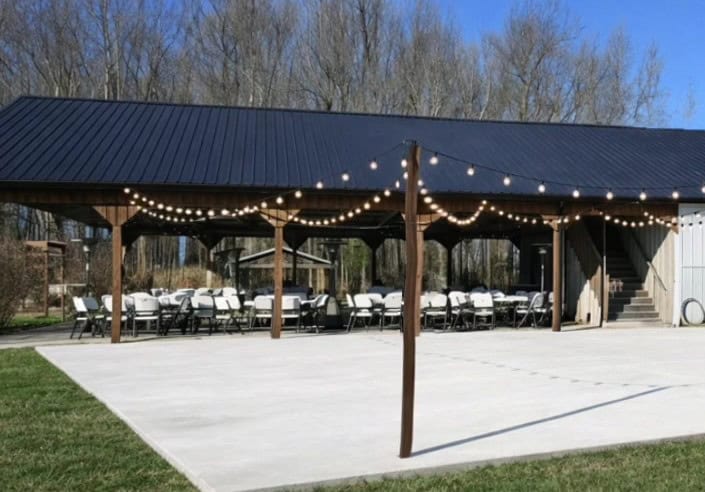
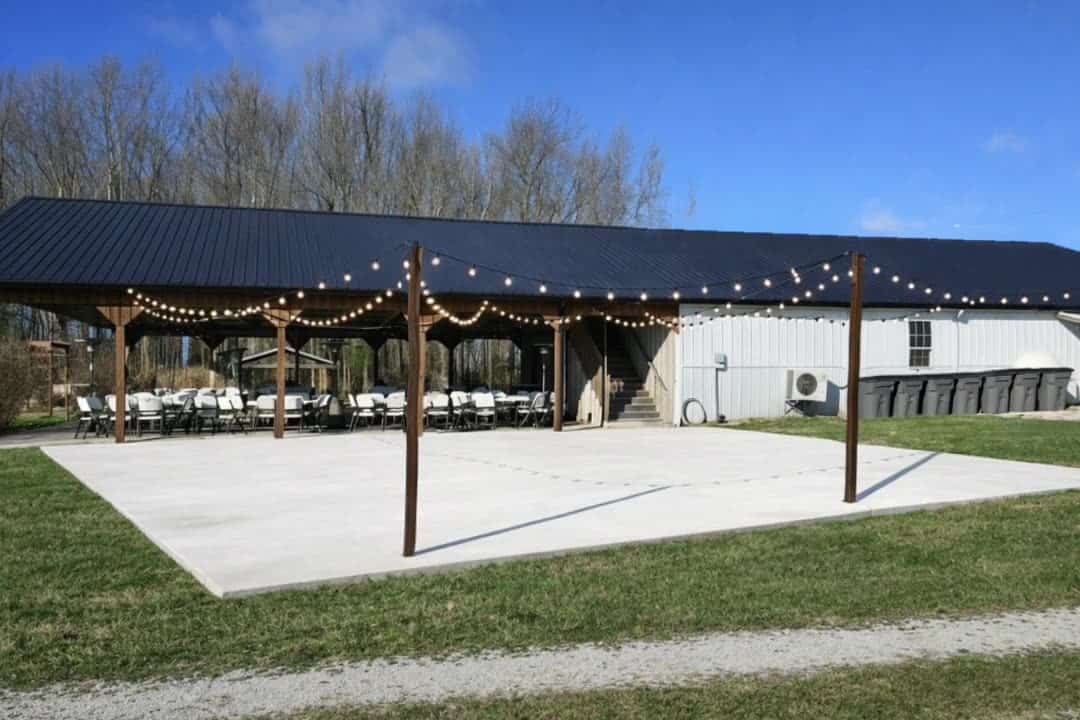
At Highland Oaks, the covered pavilion seats a full reception with tables and chairs set to your count, and it opens to the oaks and the field so dinner never feels boxed in. We host weddings up to 300, we run the bar and bartenders in house, and Carrie and the team help you and your caterer settle on a service style and a floor plan that keep the night flowing. We are in Palmyra, about twenty-five minutes from Louisville. Come tour the pavilion and picture your dinner in it, and when you are ready, our pricing page lays out what is included. For the drinks side of the night, here is open bar vs cash bar, and if you are still sizing the crowd, start with how many guests to invite.
Choosing a caterer too? Start with can you bring your own caterer to your wedding venue.
Planning a wedding near Louisville?
Highland Oaks is a barn wedding venue in Palmyra, Indiana, a short drive from Louisville. Come walk the grounds and picture your day. Tours take about 45 minutes, with no pressure.
Book a TourPrefer to talk it through first? Call or text (502) 785-9671.