
How to Keep Guests Warm at a Fall Outdoor Wedding
The forecast says sixty-four and sunny. It is, at two o’clock. By the time your first dance starts it is forty-one degrees, the wind has picked up across the field, and a third of your guests are wearing somebody else’s jacket.
Fall in southern Indiana gives you the best light of the year and the widest temperature swing of the year, usually on the same day. Here is how to plan for the swing so your guests are still outside with you at nine o’clock.
Plan for the evening, not the afternoon
Almost every cold-guest problem traces back to one habit. You look at the daytime high, picture your ceremony in it, and stop planning there. But your ceremony is the warmest half hour of your night. Everything after it happens while the temperature falls.
A useful way to think about October and November here: expect the end of your reception to feel well below the daytime high, and expect the fastest drop in the hour right after sunset. That hour usually lands in the middle of dinner, when your guests are sitting still, which is the worst possible time to be cold.
Plan your comfort around that hour. If it works then, it works all night.
Three weeks changes the whole wedding
An early October date and a first-weekend-of-November date sound like the same season. They are not the same wedding.
In early October the sun is still up past seven and a wrap over a dress is usually enough. By the first weekend of November the clocks have fallen back, it is dark before six, and the cold arrives while the salad is still on the table. Same season on paper, completely different night for your guests.
If you have not picked your date yet, this is worth knowing before you sign. Our post on the best month to get married in southern Indiana walks through the tradeoffs month by month.
The cheapest fix is your start time
Before you rent a single heater, move your ceremony earlier. A fall ceremony that starts in the early afternoon puts your outdoor portraits in warm light and gets your guests under cover before the temperature turns. A five o’clock ceremony in late October puts everyone outdoors at exactly the wrong hour.
The tradeoff is real. An earlier start means golden hour lands during dinner instead of after it, so plan a short break to step outside. We cover the whole question in what time your outdoor ceremony should start and in the hour-by-hour timeline.
Heaters help, but only where people stand still
Patio heaters warm the people under them, not the air around them. Outdoors, and especially in any wind, the heat that misses a body is gone. So placement matters more than the number of units.
Put them where people stay put. The bar line. The edges of the dance floor. The back rows of seating. The entrance where guests arrive and stall. Scattering them evenly across an open lawn feels thorough and does almost nothing.
Two questions to settle early: how many the venue has, and where they plug in. Electric heaters draw real power, and a barn built for string lights and a band does not always have a spare circuit in the corner you want. Ask before you assume.
Confirm the fire rules in writing too. Most barn venues do not allow fire pits or open flame near the building, so do not plan a fire feature nobody has approved.
Blankets people will actually use
The blanket basket is the most photographed and least used item at fall weddings, because couples put it somewhere polite. Put it where a cold person walks.
- A basket at the ceremony entrance, not a table off to the side. People take what is handed to them on the way in.
- Wraps or pashminas in one neutral color, so the ceremony photos read as intentional rather than as a pile of laundry.
- Simple fleece throws bought in bulk. They look right folded over the back of a bench and nobody worries about returning them.
- A bowl of hand warmers at the bar. They cost almost nothing and guests talk about them.
- A few pairs of thin gloves for the people standing outside the entire ceremony, starting with your officiant and your musicians.
- A marked spot to return anything you want back, or you will be collecting throws off the field at midnight.
Warm drinks do more than one more heater
A hot drink is the fastest and cheapest way to make a cold guest comfortable. Cider and cocoa at the ceremony exit, coffee that stays hot through dinner, something warm again near the end of the night when people are deciding whether to stay.
If you want a spiked cider or a hot toddy, ask early. At a lot of venues, including ours, all alcohol runs through the house bar, so a warm cocktail is a conversation with your venue rather than something you bring in. Our post on open bar versus cash bar covers how the bar side usually works.
Tell your guests what to expect
Guests dress for the picture in their head. If the picture is a wedding, they dress for a warm room. One honest line on your wedding website fixes it.
Something like this: the ceremony is outdoors on grass, it will be cool once the sun goes down, please bring a coat you do not mind being seen in and shoes you can walk on grass in. That last part matters more than people expect, because heels sink into soft fall ground and nobody packs a second pair unless you tell them to.
Say it again in person to the guests who will not read it. Grandparents, anyone traveling from somewhere warm, anyone in a strapless dress, the parents of small children. Your wedding party needs the same warning, since they are outside for photos longer than anyone.
Ask your venue these before you sign a fall date
Send all of it in one email and get the answers in writing.
- Is there a heated indoor space that fits all of my guests, not just a lobby or a hallway?
- Are heaters included with the rental or an add on, and how many are there?
- Where do heaters plug in, and how many can run at once without tripping anything?
- What is the fire policy for fire pits, open flame, and anything with a wick?
- If it is too cold to be outside, who makes the call to move the ceremony inside, and by what time?
- If we move inside after the chairs are already set, who moves them and does that cost anything?
- Are the restrooms and the getting-ready spaces heated?
If a venue cannot answer the indoor backup question cleanly, that is your answer. A rain plan and a cold plan are the same plan, covered in how to plan for rain at your outdoor wedding.
How a fall wedding works at Highland Oaks
Fall is our busiest season for a reason. Peak season here runs April, May, and September through November, and the woods in the last two weeks of October are the closest thing to a guarantee that a photographer gets.
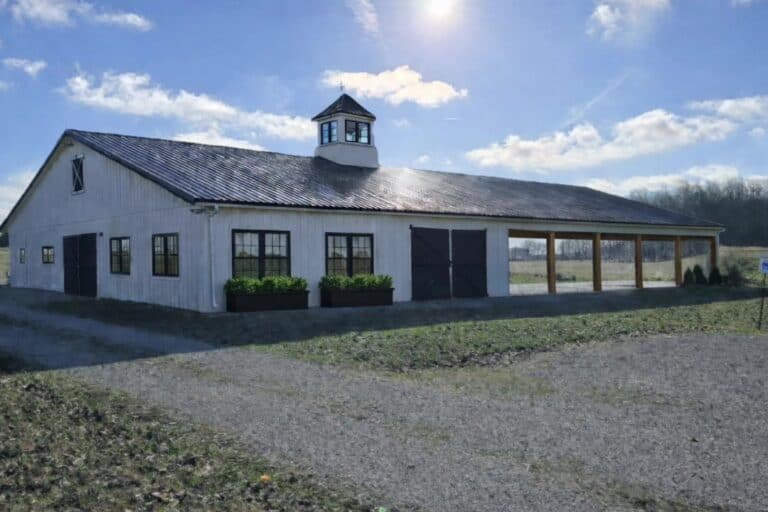
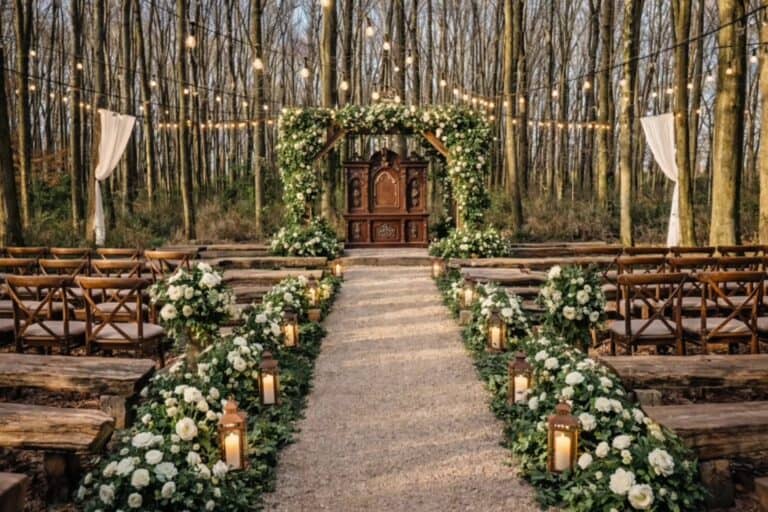
The cold plan here is built in rather than rented. Space heaters and fans come with every rental, so that is not a line item you go shopping for. Ceremonies happen out on the lawn or back in the oaks, and the barn with its attached covered space takes the reception, so the backup is a real building and not a tent you hope holds. Our staff has the barn set by noon, both getting-ready spaces open at nine, and you have a twelve-hour window to work inside. Catering is open, so a cider and cocoa station is easy to add, and the bar is ours, so a warm cocktail is one conversation.
The most useful thing you can do is stand in it. Carrie walks the whole property on a tour, about forty-five minutes, so you can see where the heaters go and how far the walk is from the ceremony to the covered space once it is dark. We are in Palmyra, about twenty-five minutes from Louisville. Book a tour when you are ready, and package details are on our pricing page.
Planning a fall wedding outside? See all three ceremony sites on our outdoor wedding venue in Indiana page.
Planning a wedding near Louisville?
Highland Oaks is a barn wedding venue in Palmyra, Indiana, a short drive from Louisville. Come walk the grounds and picture your day. Tours take about 45 minutes, with no pressure.
Book a TourPrefer to talk it through first? Call or text (502) 785-9671.