How to Plan a Small Wedding That Doesn’t Feel Small
Guest lists are getting shorter, and not by accident. More couples are trading the 150-person reception for the 30, 40, or 50 people they actually want to hug on the way in. If that is the wedding you are picturing, here is how to plan a small wedding that feels intentional and full, never sparse.
First, decide what small actually means
Small is not one number. A micro wedding usually means somewhere under 20 guests. An intimate wedding tends to land between 20 and 50. Past that you are into a mid-size wedding, which is its own animal. The label matters less than the intent behind it, so start with the question that actually decides everything: who can you not imagine the day without?
Write those names down first. Not the people you feel obligated to invite, not your parents’ coworkers. The people whose absence you would feel. For most couples that list is shorter than they expect, and it becomes the honest core of the guest list. If you want a deeper walkthrough of that process, we wrote one on how to decide your guest count.
Why couples are going small on purpose
A few years ago a small wedding usually meant a small budget. That is no longer the story. Couples planning 2026 and 2027 weddings are choosing short guest lists deliberately, because they want to be present at their own wedding instead of working a room of 180 for five hours.
There is also plain math underneath the sentiment. Most wedding costs are per-head. Every plate, every chair, every slice of cake, every bar pour scales with the count. Cut the list and the same total budget suddenly buys a better dinner, a longer evening, and details you would have skipped. We broke down the numbers in a realistic wedding budget for 50 guests if you want to see how far a smaller list stretches.
Will a small wedding feel lost at a big venue?
Here is the honest answer: it can. Forty chairs scattered across a room built for 250 feels thin, and no amount of florals fixes it. But the solution is not necessarily a smaller venue. It is a venue that knows how to scale a space down.
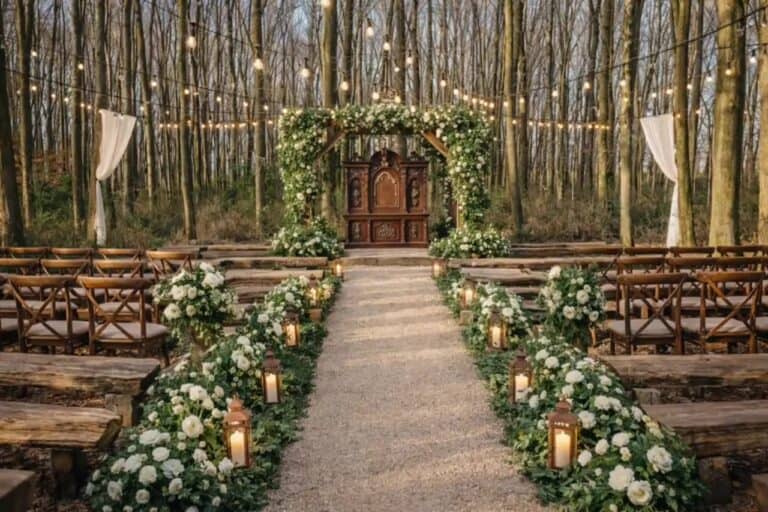
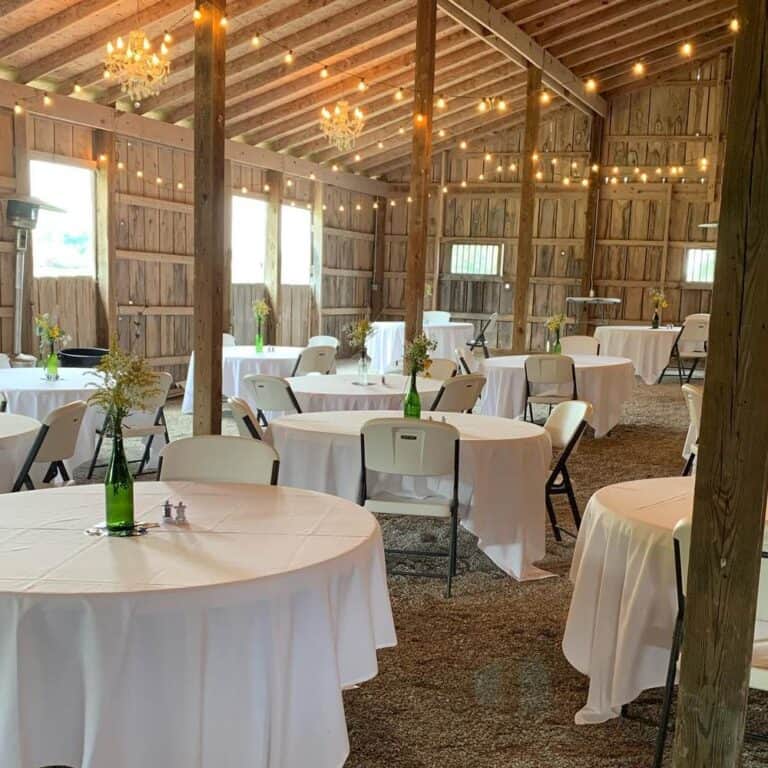
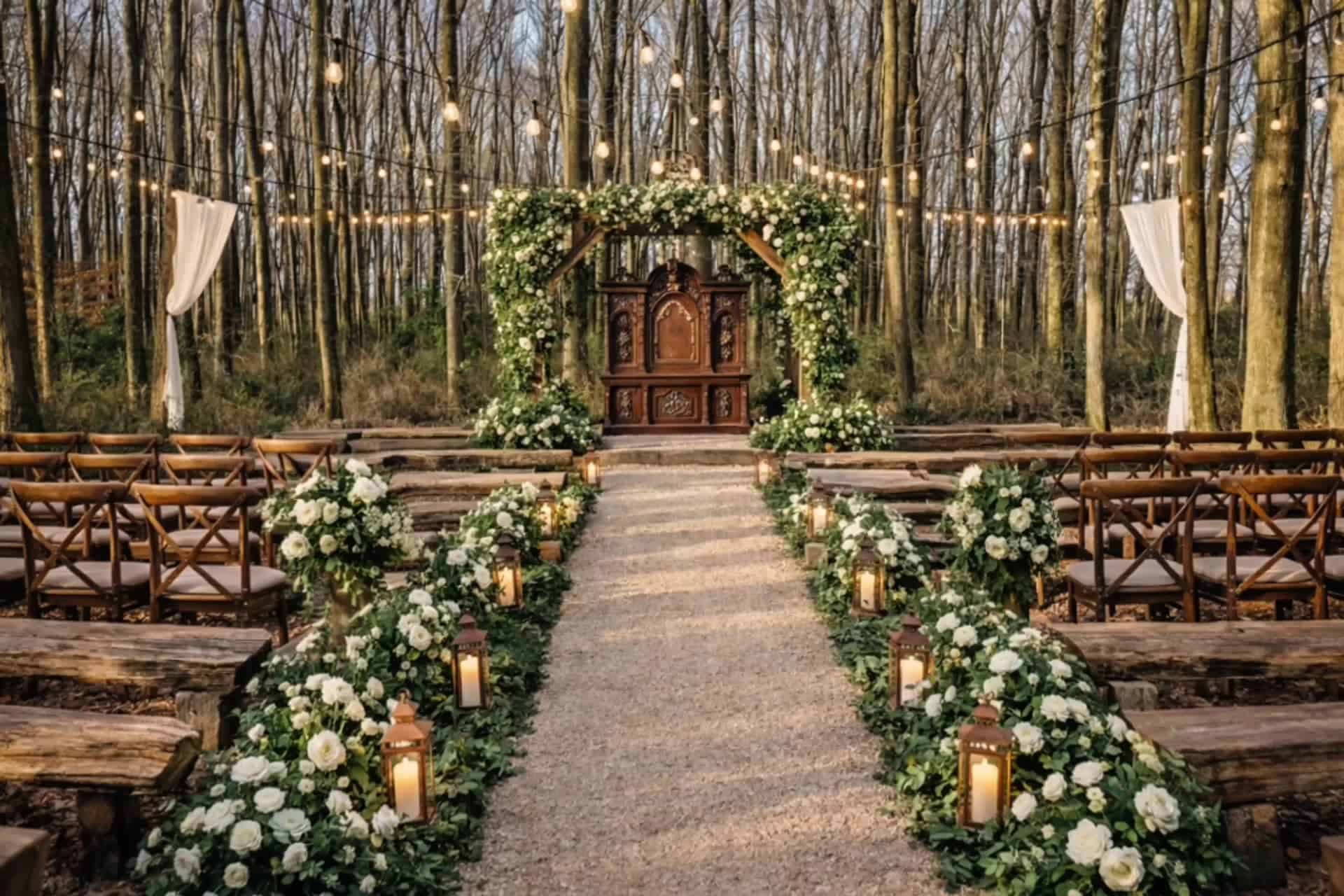
A few things make the difference. An outdoor ceremony spot that frames a small group naturally, the way a grove of oaks pulls everyone in close without a single decoration. A reception space that can be set as one defined area instead of a half-empty hall, so the party has edges. Long family-style tables instead of scattered rounds, which turn dinner into one conversation instead of eight separate ones. And warm lighting, low and close, which shrinks any space the moment the sun goes down.
When you tour, ask the venue to show you a layout for your exact guest count, not the 200-person setup with fewer chairs. A venue that hosts small weddings well will have a real answer, usually with photos. A venue that does not will change the subject.
Ask about minimums before you fall in love
Some venues have guest minimums, food and beverage minimums, or peak-Saturday policies that quietly price out small weddings. There is nothing wrong with that, but you want to know before you get attached. Ask directly: do you have a minimum guest count or spend, and does it change by day or season?
Pricing structure matters here too. Venues that charge per guest get cheaper as your list shrinks, but minimums can put a floor under that. Venues that charge a flat rate for the space cost the same at 40 guests as at 240, which can work strongly in your favor when you do the per-person math on everything else. Every venue mixes these differently, so ask for the structure in writing. Ours lives on our pricing page if you want to see one example laid out plainly.
Spend the difference where guests can feel it
The quiet superpower of a small wedding is that the money you are not spending on volume can go into depth. A dinner people talk about on the drive home. An open bar that would have been out of reach at 200 guests. More hours with a photographer you love. A live musician for the ceremony. A longer evening, because nothing about a small wedding has to run on a freight-train timeline.
Or spend none of it and keep the savings. That is a completely valid answer too, and more couples are choosing it than the wedding industry likes to admit.
What actually works at a small wedding
Some things only work when the room is small. Lean into them:
- One long table for dinner, everyone within a toast’s reach of the couple.
- Open toasts. With 40 guests, letting anyone stand up and speak is a highlight, not a risk.
- A slower cocktail hour, because no one is herding a crowd between spaces.
- Handwritten notes at each place setting. Impossible at 200, unforgettable at 35.
- A real conversation with every single guest before the night ends.
- Golden hour photos that include everyone, not just the wedding party.
And permission to skip the rest. A small wedding does not owe anyone a bouquet toss, a garter, a grand entrance, or a choreographed exit. Keep the traditions that mean something to you and let the others go without apology.
A small wedding at Highland Oaks
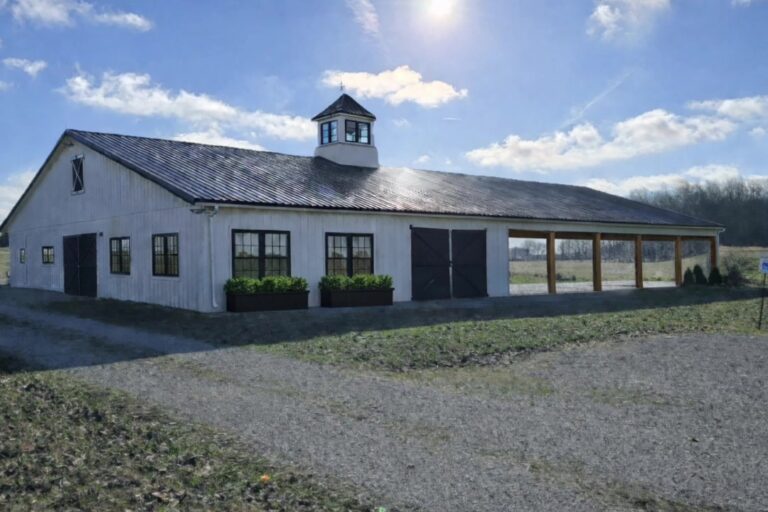
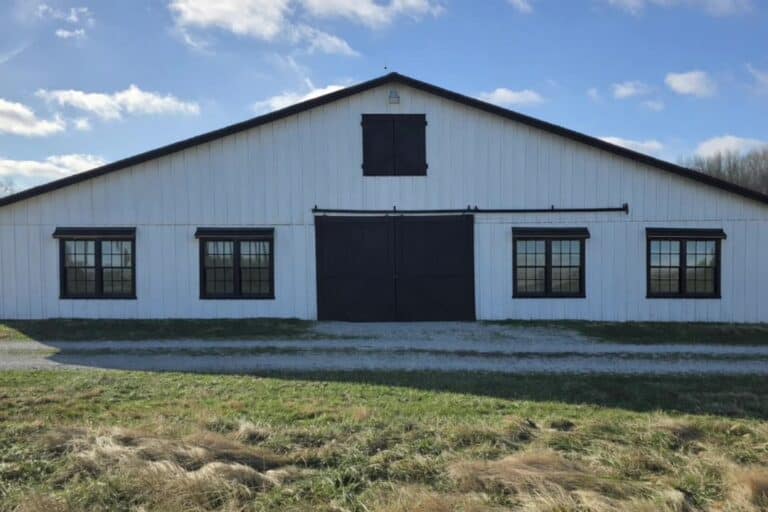
A venue that hosts up to 300 might not seem like the obvious choice for 40 guests, but a small wedding fits this property naturally. The ceremony happens under the oaks, where a few short rows of chairs feel gathered instead of staged. Dinner runs under the covered pavilion, set for your count rather than the maximum, with the string lights bringing the space in close after dark. The field is all yours at golden hour, and there is no minimum crowd required to make it feel like a wedding. Carrie and the team put the same care into 35 guests as 300.
If you are planning a small wedding in southern Indiana or the Louisville area, we would love to show you how the space scales down. We are in Palmyra, about twenty-five minutes from Louisville, and a tour is the fastest way to picture your version of the day. Reach out and come walk the property.
Planning a wedding near Louisville?
Highland Oaks is a barn wedding venue in Palmyra, Indiana, a short drive from Louisville. Come walk the grounds and picture your day. Tours take about 45 minutes, with no pressure.
Book a TourPrefer to talk it through first? Call or text (502) 785-9671.