Do You Need a Day-of Coordinator if Your Venue Has One?
You booked the venue, and somewhere in that confirmation email there is a name. An on-site manager. Someone who will be there the whole day. So when your aunt asks whether you have hired a coordinator yet, the honest reaction is a little defensive. Don’t I already have one?
It is one of the most common mix-ups in wedding planning, and it tends to surface about two months out, which is right when there is still time to do something about it. Here is the plain version of the answer.
The short answer: they are two different jobs
A venue manager works for the venue. A coordinator works for you. That one sentence explains nearly every story you have read about a bride who thought she had help and found out at four o’clock that she did not.
Neither role is better than the other. They protect different things. The venue’s team protects the property, the licensing, the hours, and the safety of everyone standing on a rural property after dark. A coordinator protects your day: the order of events, the vendors you hired, the decor you spent months collecting, and the timeline you wrote at your kitchen table.
What the venue team is actually doing that day
At a full-service venue, the on-site crew carries real weight, and it is worth knowing exactly what that weight is. Ours opens the property and has the buildings and grounds ready. Our bartenders are licensed and insured, and every drink poured here is poured by our staff. If the sky turns, the call to move the ceremony inside is ours, and we make it early rather than late. We watch the clock, because music ends thirty minutes before your event hours close and last call comes an hour before. We are also the only people who move venue-owned furniture, lamps, and artwork, which is a rule that exists because none of it can be replaced on a Saturday night in Harrison County.
That is a full job. What it is not is running your wedding.
The parts nobody covers unless you assign them
Read your contract and your vendor emails with one question in mind: whose hands do this? A surprising number of tasks have no name attached to them.
Setting out everything you brought, the centerpieces and the framed photos and the card box and the sign your friend lettered. Taking all of it back down at the end of the night, because what you carry in, you carry out. Building the timeline, then holding it when the photographer wants ten more minutes. Telling each vendor where to load in and when. Chasing paperwork, too: every vendor working here has to carry their own liability coverage and get the certificate to us fourteen days ahead, and your own event policy is due in the same window. Somebody has to actually collect those. And then the small things that are only small until they are missing. The rings. The license. The vendor tips in labeled envelopes. The gifts, loaded into somebody’s trunk at midnight.
Four moments where the gap shows up
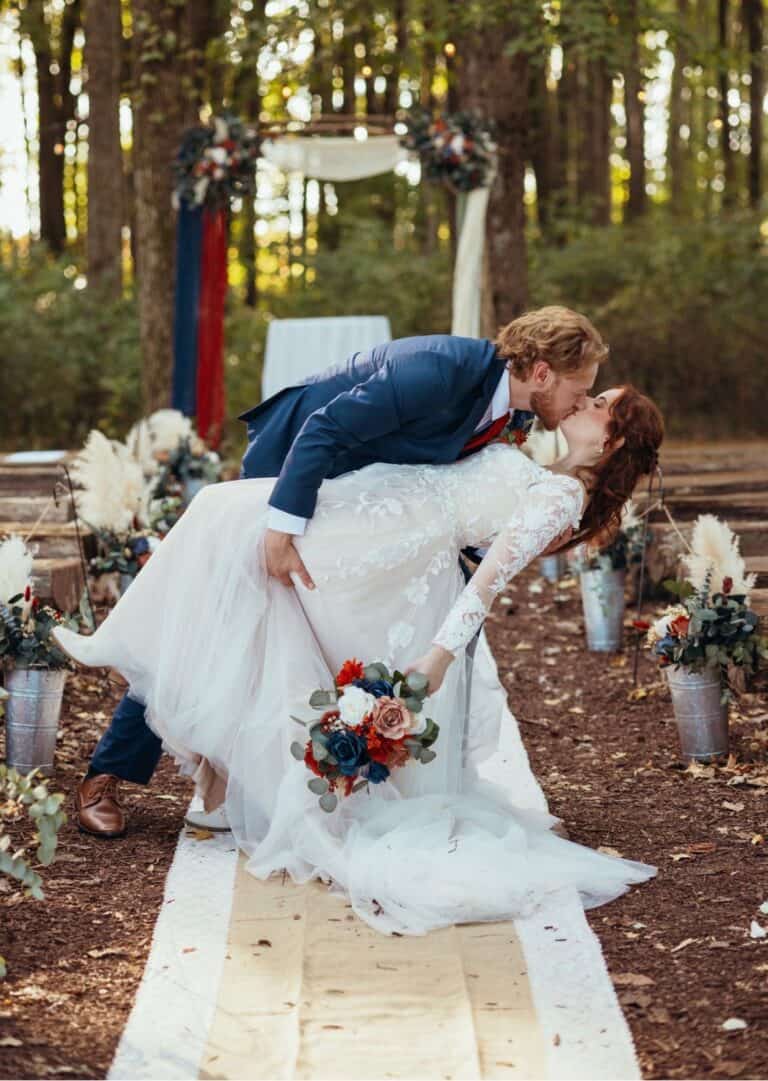
- The rain call. We decide whether the ceremony moves into the barn, and we tell you as early as we can. But if the weather turns after the chairs are already set out in the forest, those chairs come in by hand, and the hands are yours. That is a lot of trips for a bridesmaid in heels.
- The ceremony cue. Someone has to line up the aisle, hold the music, and tell your grandfather when to walk. It is thirty seconds of work that nobody thinks about until the moment arrives and everyone looks at each other.
- The dinner slide. Dinner runs twenty minutes long, which pushes the toasts, which pushes the first dance into the hour you wanted for dancing. Recovering that time takes a person willing to interrupt a caterer.
- The teardown. Last call is an hour before close and the music stops thirty minutes before. Everything you brought leaves with you that night, and cars are off the property by noon the next day. The people still standing at that point are the people who love you most, which is exactly who you did not want stacking chairs.
None of those are emergencies. They are just jobs, and on a wedding day a job lands on whoever is standing closest. Usually that is your mother.
Questions to ask your venue before you decide
Send these in one email, to your venue and to any coordinator you are considering. The answers will tell you whether there is a gap and how wide it is.
- Does someone from your team stay for the entire event, or only through setup?
- Will you set out the decor I bring, or only your own tables and chairs?
- Who cues the ceremony and starts the music?
- Who tells my vendors where to load in, and who do they call if they are late?
- If the ceremony has to move inside, who moves the chairs?
- Who packs up my things at the end of the night?
- Do you offer coordination as an add-on, and what exactly does it cover?
A venue that answers all seven plainly is telling you something good about how your day will go, whatever the answers turn out to be.
When you can honestly skip it
Sometimes the answer really is no, and we would rather say so than sell you something you do not need. You can usually go without hired coordination when four things are true. Your guest count is on the smaller side. Your ceremony and reception happen in one place with no room to flip in between. You have written a real timeline and sent it to every vendor, so nobody is guessing. And you have a point person who is not in the wedding party and not your mother, someone steady who would rather be useful than be in photographs.
If that is you, hand her three things: the hour-by-hour timeline, a printed list of vendor phone numbers, and permission to make decisions without finding you first. That last one is the part couples forget, and it is the part that matters.
Miss any one of those four and the day still works. It just works because someone you love spends it working.
How it works at Highland Oaks
Our team runs the venue. If you want someone running your wedding, we offer coordinator packages as an add-on at a couple of levels of support, and the current details live on our pricing page. Plenty of couples book the barn and bring an outside planner they already love, and that is a good day too. The only thing we would ask is that you not assume the job is covered simply because a Highland Oaks name appears on your confirmation.
Whichever way you go, the plan becomes real at the rehearsal. That is the hour to walk the aisle, name out loud who is holding the rings, and settle who makes the call if something slips. Say the names in front of everyone. Written down is better than remembered.
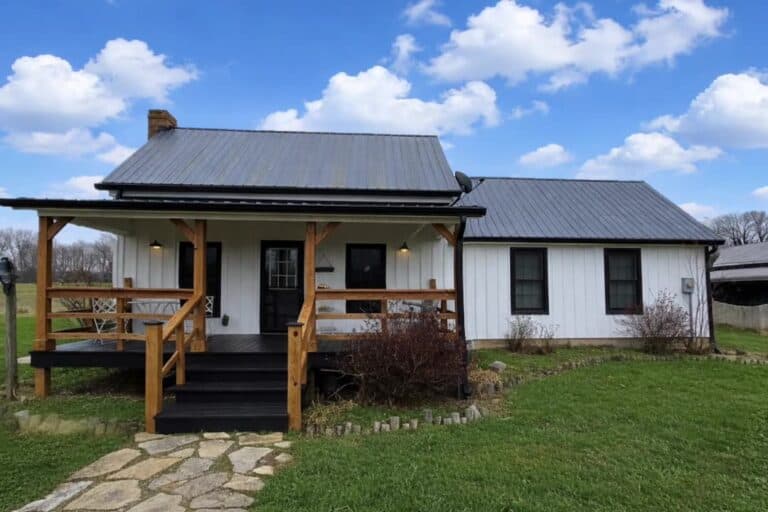
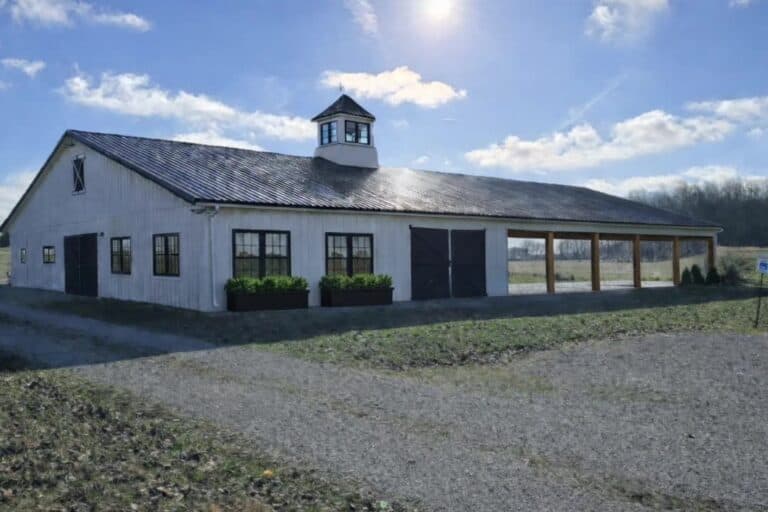
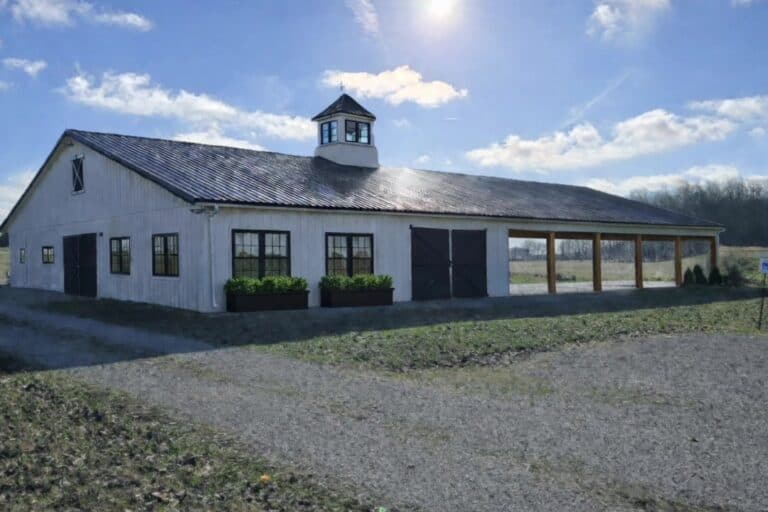
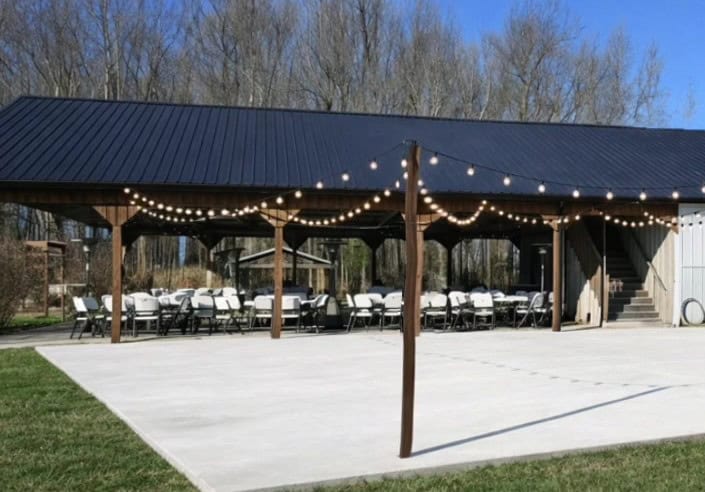
If you are still deciding, come walk it with us. A tour runs about forty-five minutes and covers the whole thirty-six acres: the barn, the covered pavilion, the forest ceremony site, and the cottage. We are in Palmyra, about twenty-five minutes from Louisville. Bring the seven questions above and ask them out loud while you are standing in the room where it will all happen. You can reach us through our contact page.
Planning a wedding near Louisville?
Highland Oaks is a barn wedding venue in Palmyra, Indiana, a short drive from Louisville. Come walk the grounds and picture your day. Tours take about 45 minutes, with no pressure.
Book a TourPrefer to talk it through first? Call or text (502) 785-9671.