What Time Should Your Wedding Reception End?
Listen instead of reading (4 min). A short conversation on choosing your reception end time and planning the night backward from it, with Highland Oaks Weddings and Events in Palmyra, Indiana as the example.
You have your ceremony time picked out. Now someone (usually a parent, sometimes the DJ) asks the question nobody thinks about until it is asked: what time does this whole thing end?
It matters more than it seems. Your end time decides when last call happens, how long the dance floor stays full, and how your guests get home. Here is how to set it with your venue’s hours in front of you instead of guessing.
What time do most wedding receptions end?
Most evening receptions run about four to five hours, from the end of cocktail hour through the last song. A ceremony in the late afternoon usually means a reception that wraps somewhere between ten and eleven at night. A morning or early afternoon ceremony can end before dark, and that is completely fine.
There is no correct hour. The right end time is the one that fits three things: the hours in your venue contract, the energy of your crowd, and how far your guests have to drive afterward.
Start with your venue’s hours, not the clock
Before you pick an end time, find out exactly how many hours you have and when they start. At Highland Oaks, every rental is a day rate with a twelve hour rental window, scheduled with our venue manager, Kaylen. That window covers everything: getting ready, setup, photos, the ceremony, dinner, dancing, and the last guest walking to the car.
Here is how the morning usually looks. The Bridal Cottage and the Groom’s Suite are ready at nine for getting ready, and our staff has the barn set by noon. If you are planning a morning wedding, we agree on a ready time with you instead. Count forward from your start and you know where the night has to land. Our post on what time you can get into your wedding venue walks through the front half of the day.
The three times that actually end a wedding
Couples tend to think of the end as one moment. In practice it is three, and they come in this order:
- Last call. At Highland Oaks, the bar closes one hour before your event hours end.
- The last song. Music ends thirty minutes before event hours close. Plan your final dance or send-off song for right before this.
- Event hours close. Guests head to their cars, vendors finish loading out, and the barn goes quiet.
So if your event hours close at eleven, last call is at ten, the last song plays at ten thirty, and the evening is done at eleven. Give that to your DJ and your planner in writing so nobody is surprised.
The easiest way to set a reception end time is to build the whole evening backward. Pick when you want the last song to play, then subtract dancing, toasts, dinner, and cocktail hour until you land on a ceremony time. If the math pushes your ceremony uncomfortably early, shorten cocktail hour or dinner service before you cut dancing.
In the fall, keep the light in mind too. The sun sets earlier in October and November, and golden hour over the field and the oaks comes earlier in the evening. Many couples slip out for portraits between dinner and the first dance, which means the evening portion of the night starts in the dark. That is a beautiful thing under the barn lights, but it shifts how late a party feels. Our hour by hour wedding timeline is a good starting template.
Think about the drive home
Your end time is also a travel plan. Highland Oaks sits on thirty-six acres in Palmyra, about twenty-five minutes from Louisville, and most out-of-town guests stay at hotels in Corydon or New Albany, fifteen to twenty-five minutes away. Those are easy drives, but they are country roads at night, after a long day.
A few things that help:
- If you have a lot of older guests or families with young kids, expect a wave of goodbyes after cake. Plan the big moments (toasts, first dances, cake) before that wave so nobody misses them.
- If most guests are staying at one hotel, a shuttle or a group of designated drivers makes a later night much easier. Our post on whether you need a hotel block covers how to set that up.
- Put the end time on your wedding website so guests can plan rides and babysitters ahead.
Plan the last thirty minutes on purpose
The end of a wedding tends to drift unless someone plans it. Decide ahead of time what the final moment is. Some couples want one last slow song with everyone circled around them. Others want a send-off down the path to the car.
If you are dreaming of sparklers, that needs advance written approval from us plus the proper Harrison County permits, so start early. Our post on having a sparkler exit has the details. Bubbles, a lit pathway, or a quiet last dance are lovely alternatives.
Whatever you choose, schedule it inside the window before the music ends. Then the last thing your guests remember is your send-off, not someone flipping on the lights.
What happens after the music stops
When event hours close, the night does not just vanish. Your caterer will have already cleaned the kitchen and service areas and hauled their trash after dinner service. Your other vendors pack up and load out. Any decor you brought comes down with your crew, and venue-owned furniture stays where it is for our staff to handle.
Guests head out from the designated parking lot, and any car left overnight needs to be off the property by noon the next day. Our neighbors are close, so we ask that the last goodbyes in the parking lot stay at a reasonable volume. If you are curious how the rest of the reset works, our post on who cleans up after a wedding explains what we handle and what your team handles.
Should you end early or stay late?
There is a real case for both. A reception that ends while the dance floor is still full leaves everyone wanting a little more, and that is the feeling guests carry home. A longer night gives you more time with people you may not see again for years.
If you are unsure, plan for a slightly shorter night with a strong finish. Running past your contracted hours is possible in some cases, but it is billed by the hour under your contract and has to work with staff and neighbors, so it is better to build the night you want into your hours from the start. Kaylen can walk you through how to lay out your twelve hours so nothing feels rushed.
See how the evening feels in person
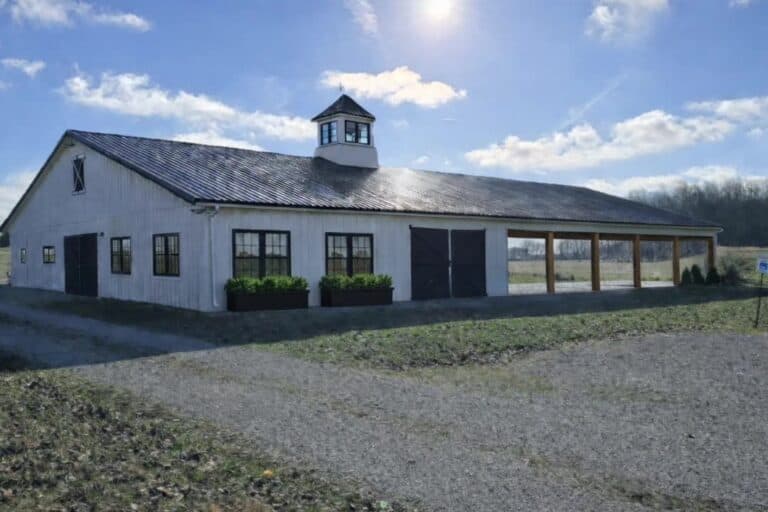
The best way to picture your night is to stand in the barn as the light goes down over the field and imagine the last song. Tours at Highland Oaks run about forty-five minutes and cover the whole property, from the Bridal Cottage to the forest and the Great Lawn. You can see what is included on our pricing page, then come walk it with us in Palmyra.
Episode transcript
Most people think a wedding timeline starts with the ceremony, but the secret to a stress-free night actually requires you to start at the exact moment the venue locks its doors and plan backward. Yeah, you really have to flip your thinking. Today we are doing a deep dive into exactly what time your wedding reception should end and how to perfectly structure your timeline. The short answer, most evening receptions run about four to five hours, usually wrapping up somewhere between 10 and 11 p.m. Right, but to nail that you don’t just guess your start time. Exactly. You build it in reverse. Okay. Let’s unpack this. It really is a shift in mindset because you’re reverse engineering the evening and to do that you have to realize that a wedding reception doesn’t actually have just one ending. Wait, it doesn’t? No, it actually has three.
Three endings? Okay, so it’s less about picking a start time and more like, I mean, setting up a line of dominoes starting from the end of the night. If you want the final domino to fall at a certain hour, you measure backward. That is a great way to put it. Our source material uses Highland Oaks Weddings and Events over in Palmyra, Indiana as this fantastic baseline example. Oh, that’s a beautiful venue. It really is. And they offer this very generous 12-hour rental window, which gives you room to breathe. So how do the three endings fit into those 12 hours? Well, you plan around three distinct markers. First is last call, which is one hour before the event hours close. Okay, got it. Second is the last song, and that’s 30 minutes before close. And the final ending is when the event hours actually close, meaning guests head out and the barn goes quiet. Wait, so if I have a venue until midnight, the last song isn’t at midnight because cutting the music 30 minutes early, I mean, that feels like leaving party time on the table.
It sounds counterintuitive, yeah, but think about the logistics. It takes time for 150 people to say their goodbyes, find their coats, use the restroom, and organize shuttles. Right. People don’t just vanish. Exactly. If the music plays right up to the final minute, everyone is just scrambling and you end up stressed about overtime, that 30-minute buffer protects the whole vibe of the night. Okay, that makes sense in theory. But what happens when reality hits, like say, an autumn wedding where the sun sets at 5 p.m. Doesn’t a strict reverse timeline ruin the chance for those perfect sunset photos? Actually, working backward is exactly what saves those photos. Oh, really? How so? Because you locked in the end time and subtracted the reception hours, you know exactly where dinner falls. Right. So in October or November, you just schedule a window to slip out for golden hour portraits right as the light is perfect.
Then you return to kick off your first dance under the barn lights. That’s so smart. So you’ve worked backward, squeezed in the sunset photos, and hit that last song mark. But getting the timeline right isn’t just about fitting it all in, right? It’s about what physically happens to the guests next. Yes, the send-off. You really have to orchestrate that last half hour on purpose. Whether you want bubbles, a lit pathway, or just a quiet private last dance. Right, or sparklers, which by the way, usually just need a quick written approval and a local permit. Good tip. But the key is you do the send-off before the energy dies. And remember, Highland Oaks is nestled on 36 acres of beautiful country roads. Which is stunning, but definitely means you have to plan on the drive home. Exactly. Setting a firm end time on your website well in advance helps guests arrange designated drivers or shuttles.
And for older guests who might not make it to that grand exit, I mean, front loading the big moments is key. If you do the toasts and cake cutting early, grandma gets to experience the highlights without feeling obligated to stay until 11 p.m. That is so important. And it’s not just the guests we have to think about. What about the vendors? Right. Because once the guests clear out, someone has to clean all this up. That 12-hour window gives caterers and vendors a quiet buffer to easily load out after the event hours close. That’s a huge relief. It really is. Plus, there’s a massive benefit for guest safety at Highland Oaks. Cars can actually be left overnight in the designated lot. Oh, wow. Really? Yeah. They can just be picked up by noon the next day, which makes the drive home completely stress-free. That is incredible. That takes so much pressure off everyone. Which leaves you with one final thought to mull over for your wedding day.
What’s that? Is choosing to end the night slightly early while the dance floor is still completely packed and leaving your loved ones wanting just a little bit more. Actually, the ultimate wedding flex.
Planning a wedding near Louisville?
Highland Oaks is a barn wedding venue in Palmyra, Indiana, a short drive from Louisville. Come walk the grounds and picture your day. Tours take about 45 minutes, with no pressure.
Book a TourPrefer to talk it through first? Call or text (502) 785-9671.