What Time Should Your Outdoor Wedding Ceremony Start?
The hour you pick for your ceremony shapes more of the day than most couples realize. The light, the photos, when your guests eat, whether they fan themselves through your vows. Pick the time before you book the band, the caterer, the photographer. It is the spine the rest of the day hangs on.
Start with sunset and work backward
Here is the part no one tells you on the first venue tour. You do not pick the ceremony time first. You pick the sunset time first, and work backward.
For an outdoor ceremony, you want the sun low but not gone. That means starting roughly two hours before sunset. Sunset at Highland Oaks in late June lands a little before 9:15 PM. In mid-September, around 7:30 PM. In mid-October, closer to 6:40 PM. Two hours before each of those is your sweet spot.
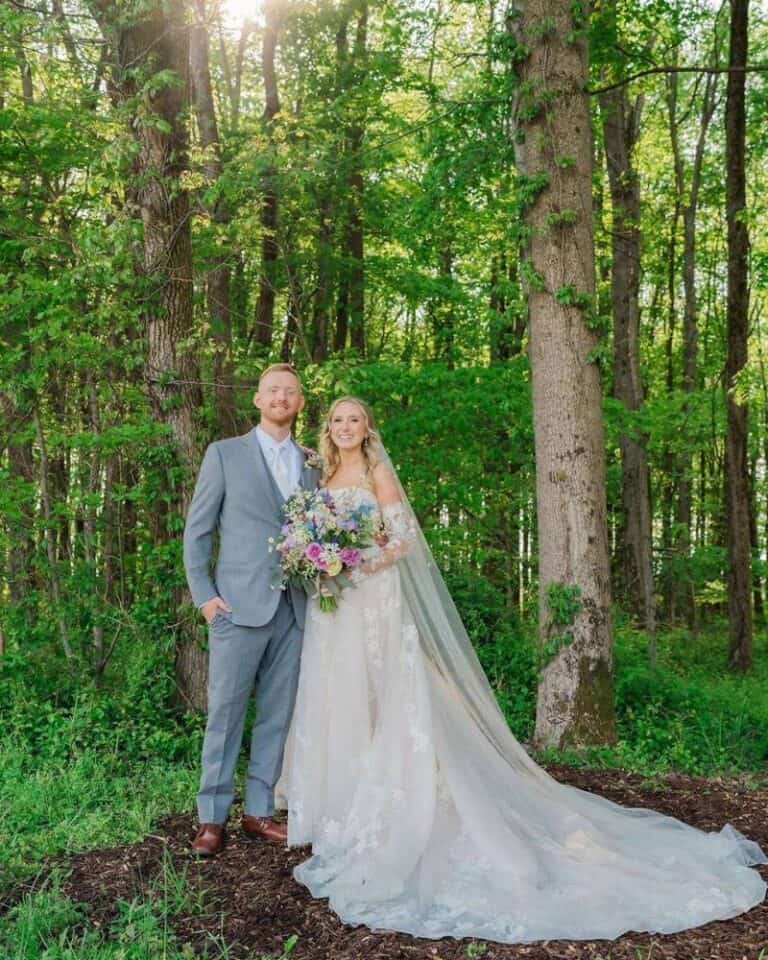
That window does three things at once. The sun is gentle enough that nobody is squinting. The light through the oaks goes warm. And your photographer can pull you for portraits between the recessional and the reception without you stepping away from your own party.
Why your photographer keeps mentioning golden hour
Golden hour is the soft, warm light in the hour or so before sunset. Direct overhead sun at 2 PM is harsh. It makes you squint, it lights the underside of your nose, and it blows out the white of your dress. Two hours before sunset, the light comes in sideways. It wraps around faces. It flatters skin. That is the light couples are paying for when they hire a wedding photographer, and the ceremony time you set is what decides whether they get it.
If you wait too long, the sun drops behind the tree line and you are taking flash photos in the dusk. If you go too early, you are fighting heat and squint. Two hours before sunset is the line.
What 4 PM in July really feels like
A common instinct, especially for a summer wedding, is to start the ceremony around 4 PM so the reception can run long. The math seems right. The problem is the temperature and the angle.
In southern Indiana in July, 4 PM is often the hottest hour of the day. The sun is still high, the air is heavy, and your grandmother in the third row is wishing she had stayed home. By the time you finish the ceremony and walk back down the aisle, the women in long sleeves are pink and the men in suit jackets are damp.
Push that ceremony to 5:30 or 6 PM and the whole tone of the day changes. The air cools. The shade lengthens across the field. Your guests stop sweating and start paying attention to what you are actually saying to each other.
How long between the ceremony and dinner?
A useful way to think about it: two windows, not one block.
After the ceremony, you want cocktail hour to run sixty to ninety minutes. That gives you time for portraits and gives your guests time to find a drink, find a friend, and find their seat. Less than sixty minutes and your photographer is sprinting. More than ninety and your guests get restless.
So if your ceremony starts at 5:30 and runs about thirty minutes, plan dinner for around 7:00 or 7:15. If you are doing a first look before the ceremony, you can push dinner earlier and give yourselves a longer reception. If you are not doing a first look, leave the full ninety.
When to take the ceremony outside, and when not to
This is the honest part. Not every hour of the day is right for an outdoor ceremony, even at an outdoor venue.
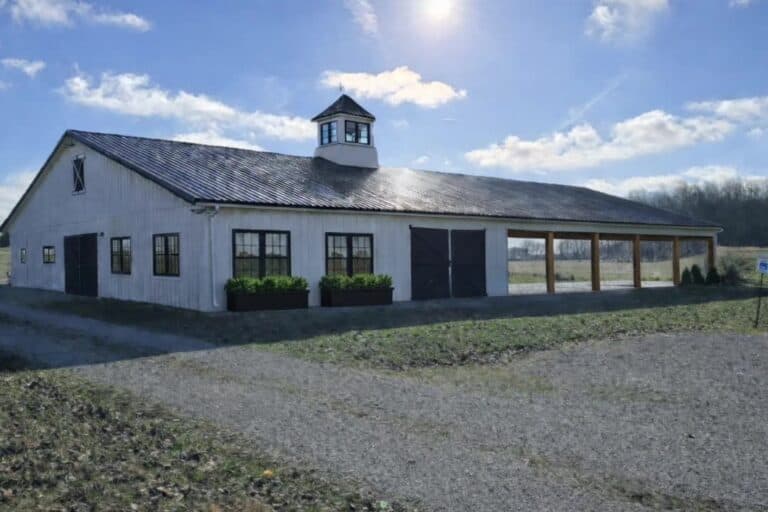
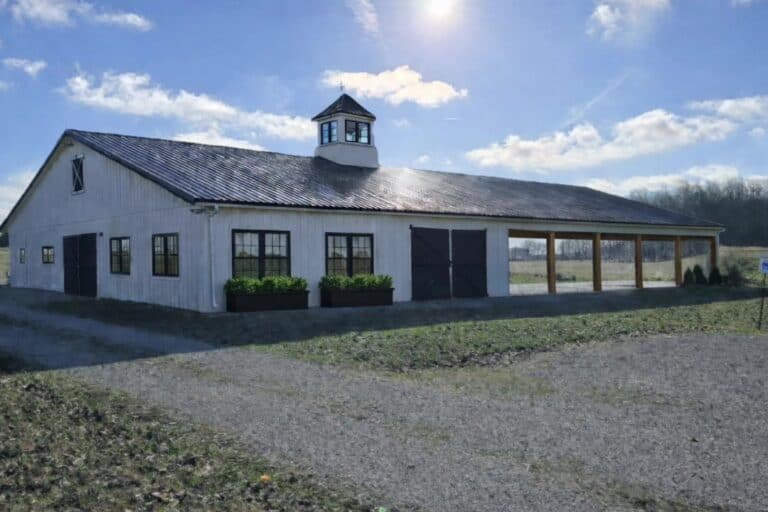
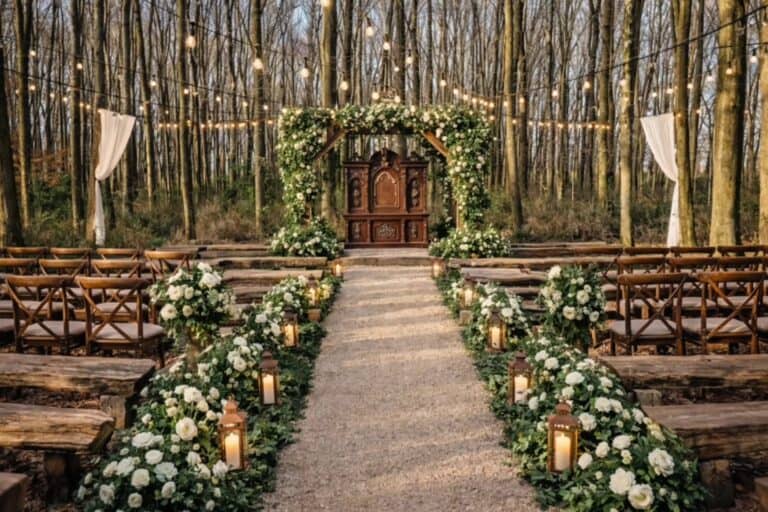
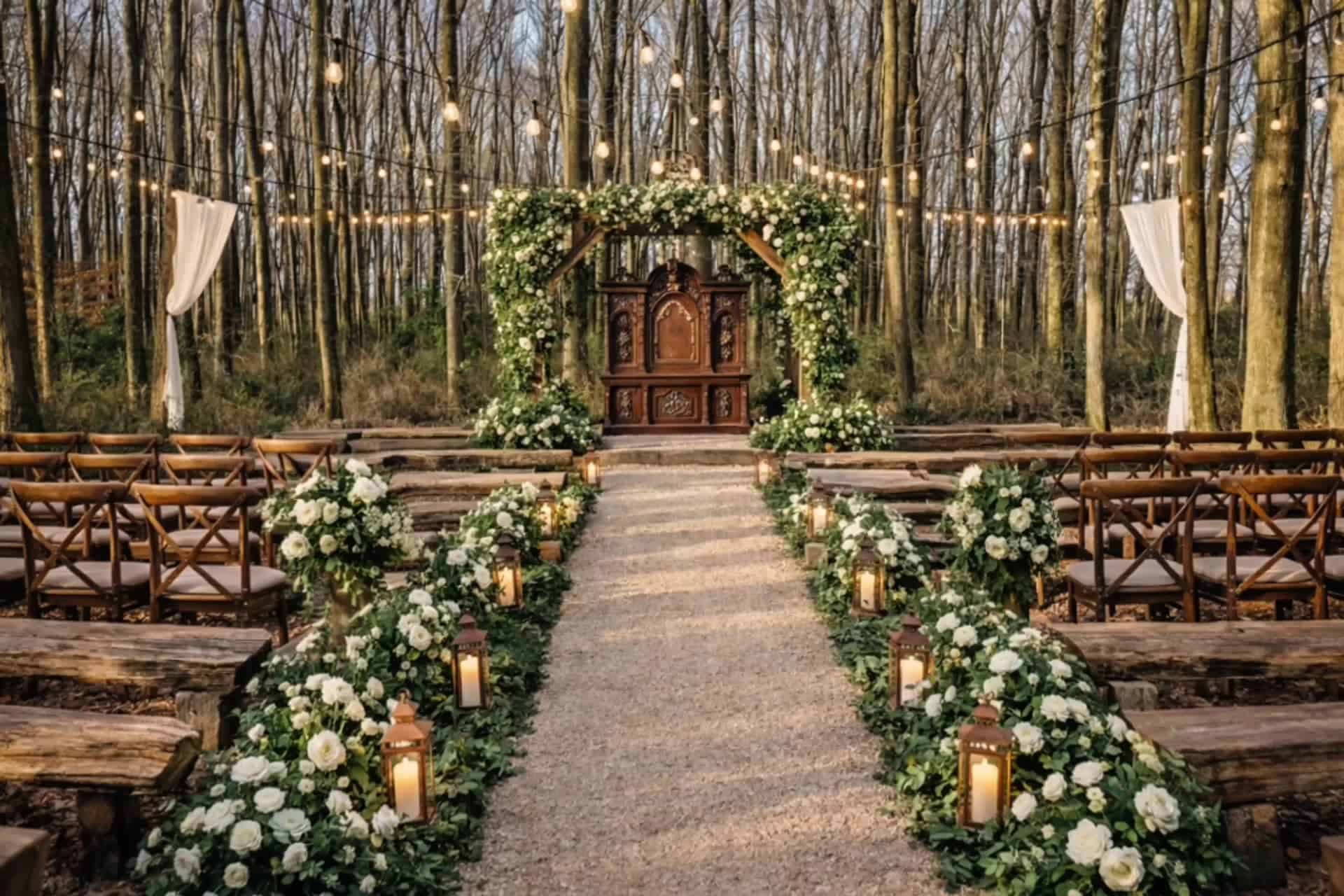
A ceremony tucked into the oaks works best in the late afternoon, in the shoulder seasons, or under cloud cover in the middle of summer. We have a covered pavilion and a barn for the moments when an outdoor ceremony is not the kind thing to do to your guests. A noon ceremony in August at any outdoor venue is uncomfortable, no matter how lovely the trees are. You can have the outdoor wedding you pictured and still be a good host. Often that just means moving the start time later.
A simple rule of thumb for southern Indiana
For a Highland Oaks wedding, here is where most couples land once they have walked through the math:
- Spring (May, early June): ceremony at 5:00 or 5:30 PM, dinner around 7:00.
- Peak summer (late June through August): ceremony at 6:00 PM, dinner around 7:30 to 8:00.
- Early fall (September): ceremony at 5:00 PM, dinner around 6:30.
- Mid fall (October): ceremony at 4:30 PM, dinner around 6:00.
These are starting points, not rules. A first look, a long aisle walk, a ceremony with extra readings, all of it shifts the math by ten or twenty minutes.
What changes when the leaves turn
October weddings have a different problem from July weddings. The light is gorgeous, but it leaves earlier. Sunset moves up by about a minute and a half a day in the fall. The wedding you booked in October planning for a 5:00 PM ceremony might have only forty-five minutes of usable outdoor portrait light after the recessional.
So in the fall, build the timeline backward from when the light dies, not from when the band starts. If you want outdoor portraits of just the two of you in the field, do the first look before the ceremony. That way the family photos and the couple portraits can happen between cocktail hour and dinner, while the light is still alive.
Come walk it before you decide
A clock answer only goes so far. Standing in the ceremony space at the hour you are considering is what makes the choice obvious. The light hits the arch differently in June than in September. The shade falls across the chairs at a different angle. The breeze comes through the field at a certain time of day and not another.
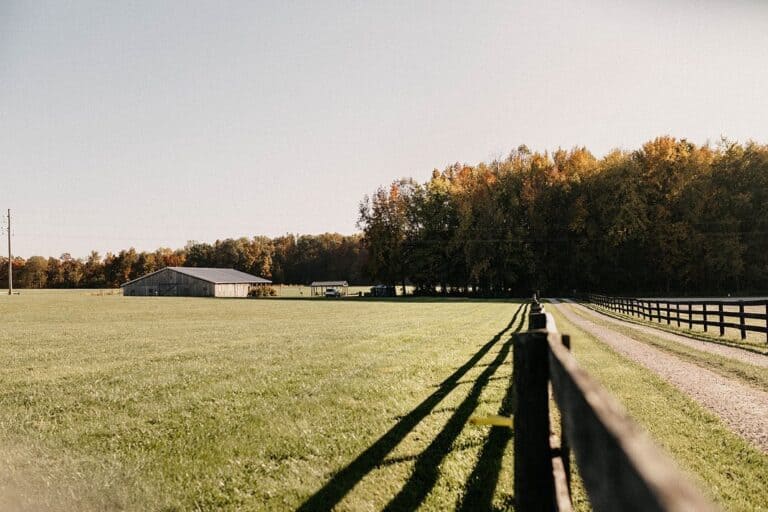
If you are weighing a date and a time at Highland Oaks, come walk the property at roughly the hour you are considering. We can show you what 5:30 looks like in the woods, and what 7:00 looks like from the barn doors. The ceremony time tends to pick itself once you can see it. We are about twenty-five minutes from Louisville, just outside Palmyra in southern Indiana, and you can request a tour any day of the week.
Still choosing where to hold it? Our three ceremony sites (the woods, the open lawn and the covered barn) are laid out on our outdoor wedding venue in Indiana page.
Planning a wedding near Louisville?
Highland Oaks is a barn wedding venue in Palmyra, Indiana, a short drive from Louisville. Come walk the grounds and picture your day. Tours take about 45 minutes, with no pressure.
Book a TourPrefer to talk it through first? Call or text (502) 785-9671.